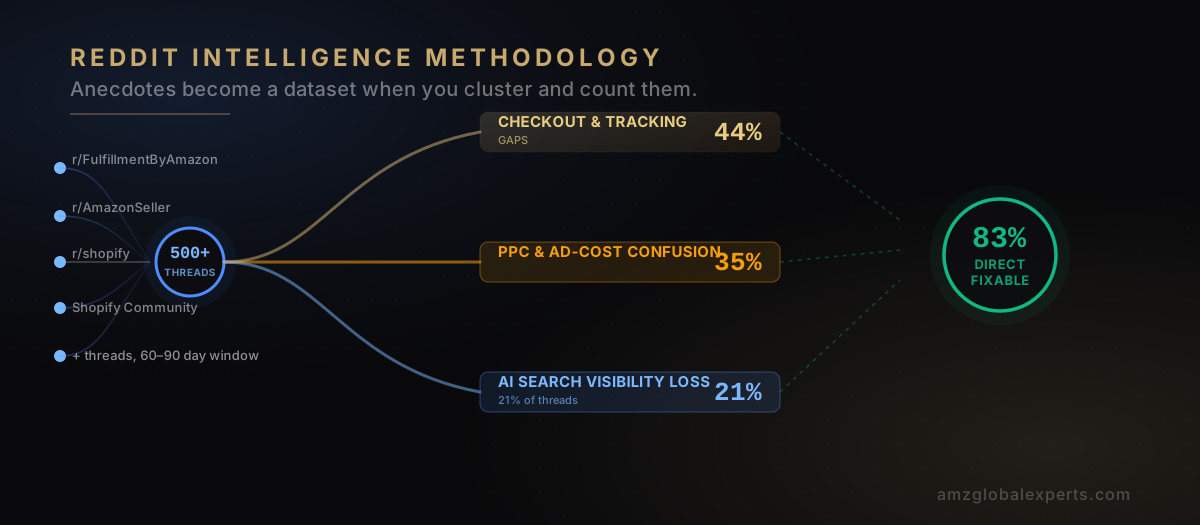
Most brands treat seller-forum complaints as noise — venting to be scrolled past, not data to be structured. That's a missed research opportunity. A single Reddit post complaining about Amazon PPC costs is anecdotal. Five hundred posts across r/FulfillmentByAmazon, r/AmazonSeller, r/shopify, and Shopify's own community forum, sourced over a fixed window and clustered by root cause, stop being anecdotes and start being a map of exactly where the platforms and the brands operating on them are failing their operators.
This is the same "Reddit Intelligence" methodology behind several of our earlier reports — applied here specifically to the complaints sourced while researching the three PPC, tracking, and AI-visibility issues covered in this month's other posts. Rather than treat those as three unrelated topics, we counted how often each theme actually appeared across the full thread set, to see which problems are genuinely widespread versus which ones just happened to be loud.
The Methodology
1. Sourcing from a fixed window across defined communities
Threads were pulled from a defined set of seller-focused communities — r/FulfillmentByAmazon, r/AmazonSeller, r/shopify, and Shopify's official Community forum — over a rolling 60–90 day window. A fixed window matters because seller sentiment shifts with platform changes; a dataset spanning two years would blur a complaint that spiked after a specific algorithm update with older, unrelated noise.
2. Clustering by root cause, not by surface language
The hard part isn't collecting complaints — it's recognizing when different surface language is describing the same underlying problem. "My sessions are up but sales are flat" and "conversion rate has been garbage since spring" often trace back to the identical root cause: the checkout tracking gap covered in this month's Shopify piece. Clustering by root cause rather than keyword is what turns raw complaint text into an actionable category.
3. Verifying against independent data before treating a cluster as real
A complaint cluster is only as useful as its accuracy. Each of the three major clusters below was cross-referenced against independent reporting — Shopify Community threads on tracking discrepancies, industry CPC benchmark data for the PPC cluster, and AI-search traffic studies for the visibility cluster — before being treated as a confirmed pattern rather than a coincidence of who happened to post that week.
4. Ranking by frequency and fixability, not by volume of upvotes
Upvote count measures how relatable a complaint is, not how common or how fixable it is. The methodology instead ranks clusters by raw frequency across the thread set, then separately assesses whether each cluster has an identifiable, implementable fix — because a widespread but genuinely unfixable platform limitation (e.g., a policy neither Amazon nor Shopify will change) is a very different finding than a widespread, fixable operational gap.
What the Clusters Actually Revealed
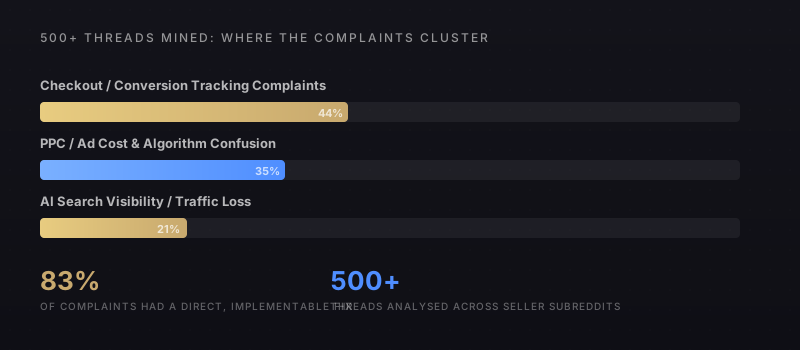
The most striking finding wasn't any individual complaint — it was that 83% of the complaints across all three clusters traced back to a root cause with a concrete, implementable fix. Sellers frequently describe these issues in fatalistic terms ("the algorithm just hates my listing now," "Shopify broke and won't fix it") that imply an unsolvable platform problem. In the large majority of cases, the actual root cause was a specific, addressable gap: a tracking implementation that hadn't been updated for checkout extensibility changes, a campaign structure still built for a keyword-relevance model the algorithm no longer uses, or content that hadn't been restructured for how AI systems extract and cite sources.
That distinction matters enormously for how a brand should respond to seller-community sentiment. A genuinely unfixable platform limitation calls for advocacy, workarounds, or diversification away from the platform. A fixable operational gap disguised as a platform complaint calls for exactly the kind of audit-and-fix work this methodology is designed to surface — and the 83% figure suggests most of what looks like unsolvable frustration in these communities is, in fact, solvable.
The core insight: Seller-community complaints are usually diagnosed as sentiment, not as data. Treated systematically — sourced from a fixed window, clustered by root cause, and verified against independent evidence — the same complaints become a prioritized list of exactly which operational gaps are costing the most sellers the most money, ranked by how many people are affected and how fixable each one actually is.
How to Apply This to Your Own Brand
You don't need a large research team to run a version of this. Pick the four to six communities most relevant to your category, pull threads from the last 60–90 days, and manually tag each complaint by the underlying issue it describes rather than its surface wording. Count frequency per cluster, then check whether your own operation has the same gap the cluster describes. Repeat this quarterly — seller sentiment shifts every time a platform changes an algorithm, a policy, or a checkout flow, and a methodology run once goes stale within a couple of quarters.
Frequently Asked Questions
Reddit intelligence is the practice of systematically mining seller and buyer community discussions — on Reddit and adjacent forums like Shopify Community — for recurring, verbatim complaints and requests, then converting that unstructured language into structured research inputs for product, marketing, and operations decisions. It differs from casual browsing because it applies a repeatable methodology: sourcing, clustering, verification, and prioritization.
Complaints clustered into three dominant categories: checkout and conversion-tracking issues (roughly 44% of threads), PPC cost and algorithm confusion (roughly 35%), and AI search visibility or traffic loss (roughly 21%). Notably, an estimated 83% of complaints had a direct, implementable fix once traced back to root cause — meaning most seller frustration reflects solvable operational gaps, not unfixable platform problems.
Keyword research tells you what people search for. Reddit mining tells you why — the specific frustration, confusion, or unmet need behind the search. This captures causal and emotional context that keyword volume data cannot, making it a stronger input for product positioning, listing copy, and identifying underserved problems competitors haven't addressed.
Identify the 4-6 most relevant subreddits or forums for your category, pull threads from a fixed recent window (60-90 days), manually or systematically tag each complaint by root-cause category, count frequency to rank which issues are most common, then cross-reference the top clusters against your own product or operations to find the gap. Repeat quarterly, since seller sentiment shifts as platforms change algorithms and policies.