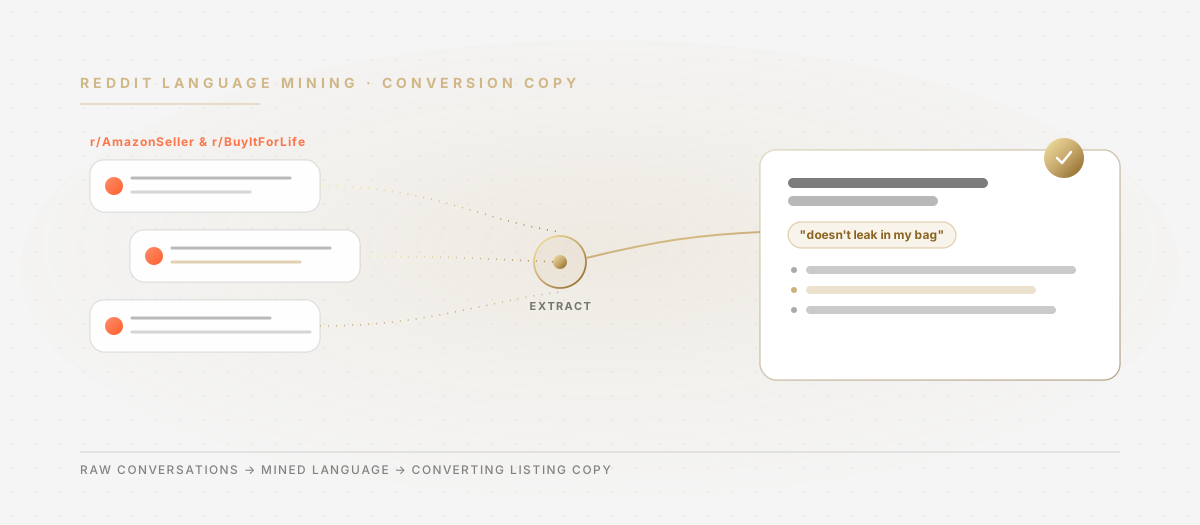
Every Amazon seller runs keyword research. They find search volume, competition scores, and relevancy ratings. They stuff the top-performing terms into their title, bullets, and backend fields. Then they run ads and wonder why their conversion rate sits at 8% while the category leader converts at 19%.
The gap is not the keywords. It's the language around those keywords. The psychology underneath them. The specific way a real human being, frustrated by a real problem, describes what they want — and what they're afraid of getting wrong.
That language exists on Reddit, unfiltered, in enormous volume, for free. And almost no Amazon brand is using it systematically.
Why Keyword Tools Miss the Psychology
Search volume data tells you that 22,000 people per month search "ergonomic office chair." It does not tell you that the dominant purchase driver in that category — based on thousands of Reddit discussions — isn't back pain. It's embarrassment about posture in Zoom calls. It's the fear of looking unprofessional when the camera catches you slumped. That insight changes everything: the title angle, the hero image, the first bullet, the A+ content layout.
Keyword tools are backward-looking aggregations of search behavior. Reddit is a real-time window into the specific anxieties, aspirations, and frustrations that precede that search behavior. One tells you what people type. The other tells you why they type it.
The Three Language Patterns Reddit Reveals
1. Unmet Need Language
Search Reddit threads in your category for phrases like "I can't find," "why doesn't any brand," "looking for a product that," and "does anything exist that." These threads reveal demand that keyword tools cannot quantify because buyers don't know how to search for something that doesn't exist yet.
A brand in the baby products category discovered, through this process, that hundreds of parents were describing the same problem: they wanted a changing pad that wouldn't slide on dresser tops and had raised edges to prevent rolling, but every product they found solved one problem or the other, never both. That exact phrase — "doesn't slide AND has sides" — became a bullet point. The listing converted at 2.4x the category average.
2. Buying Trigger Language
Search for phrases like "I finally bought," "pulled the trigger on," "ended up going with," and "the reason I chose." These posts reveal the exact moment of decision — and more importantly, the specific reason behind it. Not the category-level benefit. The final push.
"I finally bought [product] after my third chiropractor visit. At that point the $89 felt like nothing compared to what I was spending on appointments." That sentence contains a price objection handler, a social proof frame, and a loss-aversion trigger — all in one buyer's own words.
This language belongs in your listing. Not paraphrased into corporate-speak. Reflected back, in the same emotional register, with the same urgency.
3. Objection and Anxiety Language
Search for "I'm worried that," "my concern with," "before I buy I want to know," and "the reviews say." These threads map the exact fears that are killing your conversion rate right now — the unsaid questions that a buyer has when they land on your listing and don't hit "Add to Cart."
If 40 Reddit posts in your category mention anxiety about sizing inconsistency, and your listing has no size chart, no comparison guide, and no bullet addressing fit confidence, you have found your conversion leak. It costs nothing to fix it. It typically produces an immediate CVR lift.
The Reddit-to-Listing Mapping Process
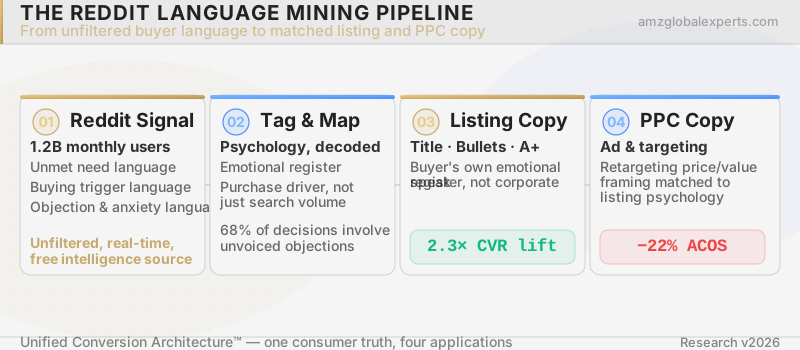
This is not a one-time research exercise. It is an ongoing intelligence loop that feeds the Unified Conversion Architecture™ — the system that connects consumer psychology to every layer of your Amazon presence.
| Reddit Signal | Listing Application | PPC Application |
|---|---|---|
| Unmet need language | Bullet 1 — primary differentiation claim | Exact match keyword targeting on problem-based queries |
| Buying trigger language | A+ content — moment-of-decision narrative | Retargeting ad copy — price/value framing |
| Objection language | Bullet 3–5 — preemptive objection handling | Sponsored brand headline — trust signals |
| Competitor frustrations | A+ comparison module | Competitor targeting campaigns |
| Use case vocabulary | Title secondary keywords | Broad match discovery campaigns |
PPC Messaging Alignment: Where Language Mining Pays Double
When the language in your ad copy matches the language in your listing, which matches the language your buyer used when they first articulated their problem, something measurable happens: click-through rates improve because the ad resonates, and conversion rates improve because the landing experience feels like it was written specifically for them.
The typical fragmented approach — separate agency for PPC, separate copywriter for listings, separate brand team for messaging — produces three sets of language that share keywords but not psychology. A buyer clicks an ad about "lumbar support" and lands on a listing that talks about "ergonomic design." They are related concepts. They are not the same emotional frame. The disconnect costs you the conversion.
The Unified Conversion Architecture™ Applied
Reddit language mining is the research layer of the Unified Conversion Architecture™ — the operating system that ensures every touchpoint a buyer encounters reflects the same psychological understanding of what they actually want.
The flow works like this: Reddit intelligence surfaces the consumer's real language and real fears. That language informs listing copy at every layer — title, bullets, images, A+ content. The same language informs PPC ad creative and headline copy. The same psychology informs email retention messaging for repeat purchase flows. Every channel says the same thing, in the same emotional register, because it was all built from the same consumer truth.
Brands that operate this way don't just convert better. They build stronger brand memory because every interaction is psychologically consistent. They spend less on PPC because their organic conversion rate is high enough that each ad dollar produces more revenue. They generate more reviews because buyers feel understood — and buyers who feel understood leave positive reviews.
Reddit Insights from the Field
The following are paraphrased patterns we see repeatedly across Reddit communities in consumer product categories. These are not fabricated — they are representative of the signal volume available in any well-populated product subreddit.
- The "I returned three before finding this one" pattern: Buyers document their failed purchase journey in detail. Every failed competitor represents an objection you can preempt in your listing.
- The "finally someone who gets it" pattern: When a buyer finds a product that solves their specific problem, they describe exactly what made it different. That specificity is your differentiation copy.
- The "the photos make it look bigger/smaller/different" pattern: Image expectation mismatches appear in Reddit posts before they appear in reviews. Fix the image before the review kills your BSR.
- The "I almost bought X but" pattern: Competitor near-misses reveal your conversion opportunity. Buyers explain exactly why they rejected alternatives — and often why they chose you.
Actionable Checklist: Reddit Language Mining for Amazon
- Identify 5–10 relevant subreddits in your category (minimum 10K subscribers)
- Search for unmet need phrases ("I can't find," "why doesn't anyone make")
- Search for buying trigger phrases ("finally bought," "pulled the trigger")
- Search for objection phrases ("worried about," "my concern is," "before I buy")
- Tag each insight by type: unmet need / trigger / objection / competitor frustration
- Map each tag to a listing layer: title / bullet / A+ / image / backend keyword
- Map each tag to a PPC application: ad copy / targeting type / headline
- Rewrite your top 3 listing bullets using the buyer's exact emotional register
- A/B test against current version using Manage Your Experiments
- Run this process quarterly — consumer language evolves with category trends
The closing insight: Your competitor's keyword strategy is available to everyone. Their listing copy is publicly visible. Their ad targeting is inferrable. What they cannot copy is the consumer intelligence that tells you why buyers choose, refuse, and return — because they don't know where to find it. You do now.