
Why the Feature List Matters More Than the Word "Bassinet"
"Diaper bag with bassinet" gets used as a catch-all marketing phrase, and it covers products with very different levels of engineering. Some are genuinely designed and tested as a temporary infant rest surface, with a stated weight limit, breathable construction, and a clear safety rating. Others are little more than a padded fold-out shelf that happens to be baby-sized, with no safety documentation behind the word "bassinet" at all.
For a newborn specifically, that gap matters. A newborn's sleep surface needs to meet a higher bar than a toddler's rest spot — firm support, breathable sides, and a clearly stated weight and age limit. Before comparing brands or prices, the more useful exercise is checking whether a given bag actually specifies these things, or just implies them with a product photo.
“The listing photos made it look like a proper bassinet. When it arrived, the 'bassinet' was basically a padded flat panel with short fabric walls — no mesh, no stated weight limit anywhere on the packaging. I didn't feel comfortable leaving her in it unsupervised for more than a couple minutes.”
r/beyondthebumpThe 8 Features That Actually Matter
These are the specifications worth checking on the product page before you buy — in order of how much they affect safety and daily usability.
1. Stated Weight Limit and Age Rating
If a product page doesn't list a specific weight limit and age range for the bassinet feature, that's a gap worth noticing — not an oversight to skip past. A bag genuinely engineered for infant rest will tell you exactly when your baby will outgrow it, typically somewhere in the first few months.
2. Breathable, Mesh-Sided Construction
Enclosed fabric panels without ventilation are a meaningful difference from a mesh-sided design. Look for at least partial mesh paneling on the sides, which matters more the longer a baby might realistically rest in the space.
3. Supervised-Rest vs. Sleep-Rated Labeling
Most diaper bag bassinet attachments are designed and marketed for short, supervised rest — not as a substitute for a certified bassinet or crib during unsupervised sleep. Read the product description closely for this distinction; it's often stated in smaller print than the feature headline.
4. A Firm, Flat Support Base
A sleep or rest surface that sags in the middle when weight is applied isn't doing what a firm surface is supposed to do. Reviews and unboxing videos are often more reliable here than the product listing itself.
5. Added Bulk and Weight When Folded Away
This is the trade-off parents report most often after buying: the bassinet mechanism — structural supports, extra padding, the folding hardware — adds noticeable weight and bulk to the bag on every single outing, not just the ones where the feature gets used.
6. Material Safety Certification
Look for CPSC lab testing and BPA-free material claims specifically on the components a newborn will be in direct contact with, not just general statements about the bag's fabric.
7. Whether It Still Has a Real Changing Station
Because the bassinet mechanism takes up structural space, some bags compromise elsewhere — a smaller or thinner changing pad, or fewer organized pockets. Check whether the changing surface is a genuine, padded, wipeable station or an afterthought.
8. Insulated Bottle Storage Unaffected by the Mechanism
Confirm the bottle pockets are still properly insulated and accessible with the bassinet folded out. Some designs route the bassinet frame directly through what would otherwise be the main storage compartment, reducing usable space for bottles and supplies.
| Feature | What to Look For | Red Flag |
|---|---|---|
| Weight & age rating | Specific number listed (e.g. up to 15 lbs, 0–4 months) | No number given, only "for newborns" |
| Ventilation | Mesh-sided panels | Fully enclosed solid fabric |
| Sleep rating | Clearly labeled "supervised rest" | Ambiguous "bassinet" claim, no rating |
| Support base | Firm, doesn't sag under weight | Soft, unsupported fabric only |
| Certification | CPSC lab-tested, BPA-free stated | No safety documentation on listing |
The quick test: If a listing can't tell you the exact weight limit, age range, and whether the surface is mesh-sided, treat the word "bassinet" as a marketing description rather than an engineering spec. Ask the seller directly for these numbers before buying, or look elsewhere.
“My advice to anyone shopping for one of these: message the seller and ask for the exact weight limit before you buy. Half the listings just say 'newborn-friendly' with nothing specific. The ones that gave me a real number and a safety cert were the only ones I trusted enough to actually use.”
r/NewParentsBassinet Feature vs. Changing Station: What You're Actually Trading Off
A bassinet attachment and an integrated changing station solve two different problems, and most bags with a strong version of one feature make some compromise on the other. Before you decide which matters more, it helps to be honest about which problem you'll hit more often.
A changing station gets used multiple times a day, every day, for well over a year. A bassinet feature — even a well-engineered one — is realistically used for a narrower window: away-from-home newborn naps in the first few months. If your daily friction points are diaper changes on the go, bottle temperature, and finding things one-handed, a bag built around the changing station tends to solve more of what you'll actually face, even without a bassinet.
Want the feature you'll actually use every day?
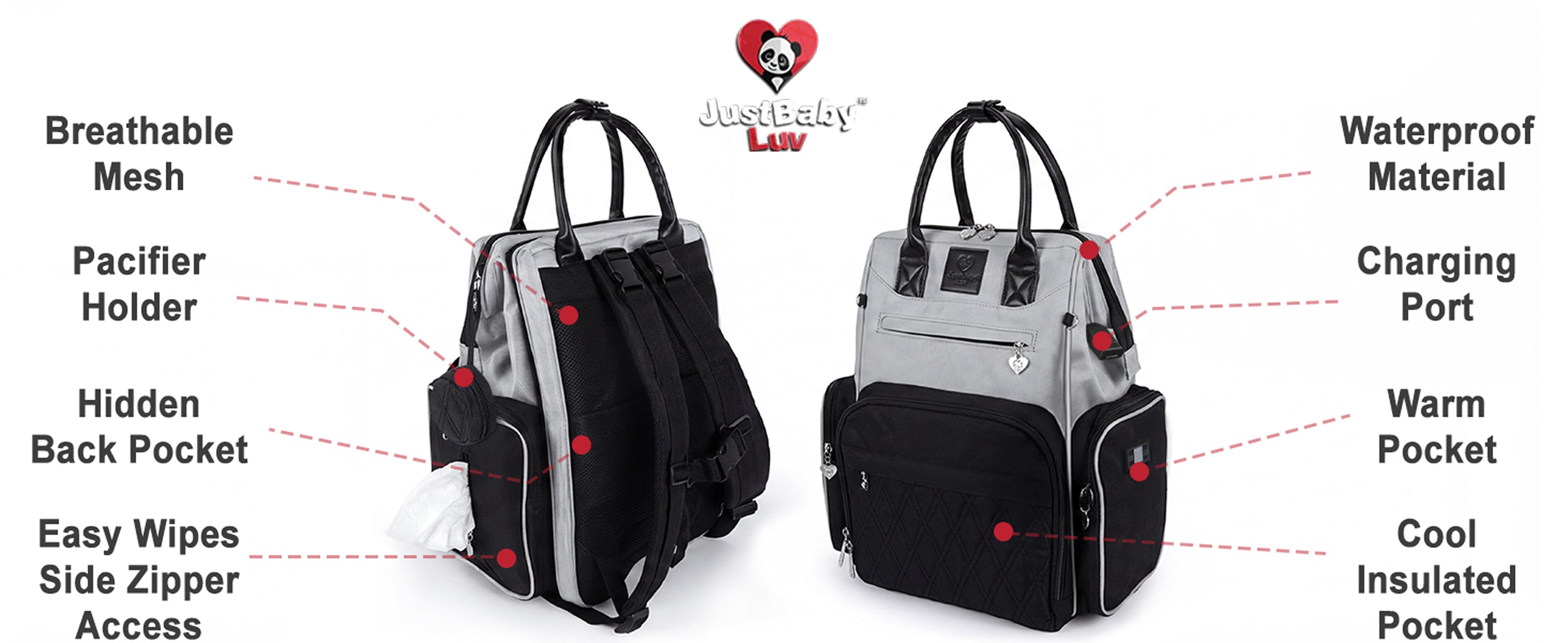
The JustBabyLuv Premium Diaper Bag Backpack skips the bassinet in favor of a real changing station, USB-heated bottle pockets, and CPSC lab-tested materials. $99.98 with free shipping and a 90-day return window.
Red Flags to Skip
- No stated weight limit or age range anywhere on the product page or packaging.
- Solid, unventilated fabric on all sides of the "bassinet" panel.
- Marketing photos showing a sleeping baby unsupervised with no accompanying safety disclaimer.
- No mention of CPSC testing or material safety for the parts touching your baby.
- Reviews mentioning sagging, tipping, or the surface not staying flat under a baby's weight.
Frequently Asked Questions
Check the weight and age rating (most are only rated for the first few months), whether the sleep surface is breathable mesh-sided fabric, whether it's labeled for supervised rest only or unsupervised sleep, how much bulk and weight the bassinet mechanism adds when folded away, and whether the bag still has real changing-station storage and insulated bottle pockets underneath the bassinet feature.
Most bassinet-style diaper bag attachments are designed for short, supervised rest periods, not unsupervised overnight sleep. Always check the manufacturer's specific safety rating and weight limit, and never assume a diaper bag bassinet meets the same safe-sleep standards as a dedicated bassinet or crib unless it explicitly states so.
The bassinet mechanism — padding, structural supports, and mesh siding — typically adds noticeable weight and bulk even when folded away and not in use. This is one of the biggest trade-offs parents report: you carry the extra weight on every outing, not just the ones where you use the bassinet feature.
No. JustBabyLuv's Premium Diaper Bag Backpack is built around a different set of features: a genuine integrated changing station, USB-heated bottle pockets, and 14 organized pockets for one-handed access. It does not include a bassinet attachment. If a built-in sleep surface is a requirement for your newborn, look specifically for bags marketed and safety-rated as bassinet combos.
The biggest red flag is a listing that mentions a bassinet or sleep feature without any stated weight limit, age rating, or safety certification. If a product page can't tell you exactly what age and weight the sleep surface is rated for, treat that as a sign the feature hasn't been engineered to a safe-sleep standard, not just marketed loosely.