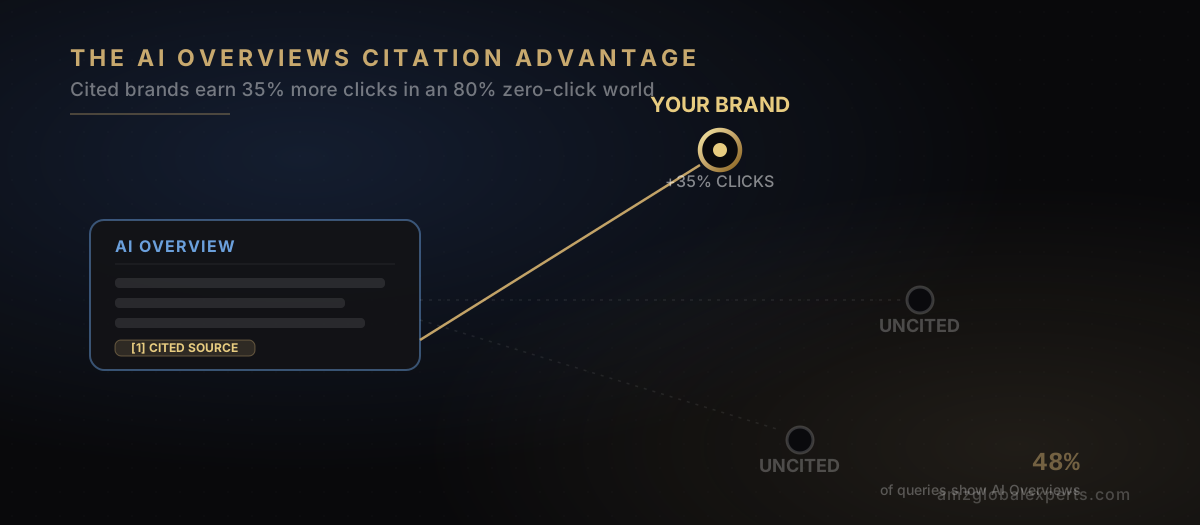
Healthline lost roughly 50% of its organic traffic. CNN lost 27–38%. HubSpot lost 70–80%. These aren't small publishers caught off guard by an algorithm update. They're some of the most sophisticated SEO operations on the internet. And they're all bleeding traffic to the same source: Google AI Overviews answering the query directly, in the search results page, before the user ever reaches a website.
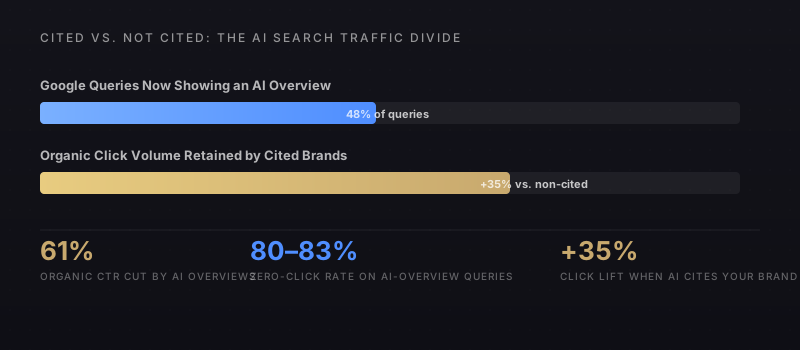
The mechanism is straightforward and brutal. AI Overviews now appear on approximately 48% of Google queries as of early 2026, up from 34.5% just three months prior. On queries where an Overview appears, the zero-click rate — searches where the user's need is fully met without visiting any site — reaches 80–83%. Overall, AI Overviews have cut organic click-through rate by an estimated 61% across affected queries. For content teams and brands who built their traffic strategy on ranking position, that's an existential threat, not an optimization problem.
The Silver Lining Nobody's Marketing Team Is Talking About
Buried inside the traffic-loss headlines is the actual opportunity: brands that AI Overviews cite as a source earn approximately 35% more organic clicks than comparable non-cited brands. Being cited doesn't just avoid the traffic collapse everyone else is experiencing — it actively compounds click volume, because users who want to verify a claim, dig deeper, or compare options click through preferentially to the source the AI itself pointed to. The AI Overview isn't purely a traffic sink. For the brand it cites, it functions as the highest-authority referral source on the page.
That's the entire premise behind Generative Engine Optimization (GEO): the discipline of structuring content specifically to be the source AI systems pull from and cite, rather than simply ranking for a query in the traditional blue-link sense. Ranking #1 in classic SEO terms increasingly means nothing if an AI Overview answers the query above your listing and cites a competitor instead of you.
What Actually Gets a Brand Cited
Self-contained, quotable factual statements
AI systems extract content that already reads like an answer. A direct factual claim near the top of a section, not a claim buried three paragraphs into narrative build-up. Content written to build suspense or lead the reader through a journey performs worse for citation than content that states the answer first and elaborates after.
Structured data that makes your content machine-legible
Organization, Article, and FAQPage schema markup gives AI crawlers an unambiguous, structured signal about what your page is, who wrote it, and what specific questions it answers. Pages without schema are harder for an AI system to confidently extract from and attribute. And confidence in attribution is exactly what determines whether a system cites you or paraphrases a competitor instead.
Demonstrated authorship and expertise (E-E-A-T)
AI systems increasingly weigh the same experience-expertise-authoritativeness-trust signals Google has used for years. A named author with a credible bio and a consistent publishing history on a topic is a stronger citation candidate than anonymous or thinly-attributed content, even when the underlying facts are identical.
Extraction-friendly structure
Numbered steps, clearly defined terms, comparison tables, and stat call-outs are dramatically easier for an AI system to lift cleanly into a generated answer than long, unstructured prose. Content engineered for citation looks, structurally, a lot like the answer an AI would generate — because that's precisely what makes it easy to extract.
The reframe: AI Overviews aren't a traffic problem to survive — they're an authority signal to win. The 61% CTR decline is happening to everyone equally. The 35% citation lift only happens to brands that engineered their content to be the answer.
Where to Start
Audit your highest-traffic informational pages first — the ones most likely to be answered directly by an AI Overview rather than requiring a click. For each, check whether the core answer appears as a clear, quotable statement in the first 100 words, whether schema markup is present and valid, and whether the page structure (headings, lists, defined terms) matches how an AI system would want to extract it. Pages failing all three are actively losing the citation battle to competitors who've already made these changes — and every week without the fix is compounding traffic ceded to whoever the AI decides to cite instead.
Frequently Asked Questions
GEO is the practice of structuring content so AI systems — Google AI Overviews, ChatGPT, Perplexity, Gemini — are more likely to cite or quote it directly in generated answers. It overlaps with traditional SEO but prioritizes different signals: clear, quotable factual statements, structured data (schema markup), demonstrated authorship and expertise, and content structured for extraction rather than for scrolling engagement.
AI Overviews cut organic click-through rate by an estimated 61% on affected queries, with the zero-click rate — searches where the user gets an answer without visiting any website — reaching 80-83% specifically on queries that trigger an AI Overview. High-profile publishers have reported organic traffic losses in the 27-80% range depending on how much of their traffic depended on informational queries now answered directly in the SERP.
Yes. Brands that AI Overviews cite as a source earn approximately 35% more organic clicks than comparable non-cited brands. Being the cited source doesn't just avoid the traffic loss other brands experience — it actively amplifies click volume, because users who want to verify or learn more click through preferentially to the cited source.
Write direct, self-contained factual statements near the top of each section rather than burying the answer in narrative build-up, implement Organization, Article, and FAQPage schema markup, establish clear author identity and credentials (E-E-A-T signals), and structure content in scannable, extractable blocks — numbered steps, defined terms, and stat call-outs — since AI systems preferentially extract content that is already structured like an answer.